
It doesn’t happen as often as it used to.
But it still happens.
Choosing a domain registrar that’s too expensive, too controlling, or too hard to manage can create long-term headaches — especially years down the road, when contact emails change and renewals get missed.
A little context helps
In the early days of the public internet, buying a domain name wasn’t simple or cheap.
There were very few registrars, and prices hovered around $30 per year — with no subscriptions, no auto-renewals, and very little flexibility. The primary registrar at the time was Network Solutions, and for a long while, it was the only real option for the general public.
People treated domain names like gold bars — buying them as “investments.” Most of those bets never paid off.
Fast forward to today
We now have plenty of affordable, easy-to-use registrars.
Some are better than others.
The name most people recognize is GoDaddy. Loud marketing. Colorful dashboards. Endless add-ons. Memorable Super Bowl ads.
It worked. People remember the name.
But recognition doesn’t always equal simplicity.
There are other registrars quietly doing good work — not overselling services, offering only what’s necessary, and making it easy to manage renewals, contact info, and billing.
Where things still go wrong
I currently have two clients still using Network Solutions.
Trying to update something as basic as a contact email address is unnecessarily difficult. Renewals are expensive. Reactivation fees are excessive. And if a domain expires, you’re required to call to renew.
Those calls almost always turn into hard sales.
One client had renewed his domain six years in advance. His email changed. He never saw the renewal notice. When the domain expired, I told him very clearly: renew the domain, pay the reactivation fee, and buy nothing else.
Instead, he was convinced he needed a .ai extension or risk losing his domain to “interested parties.”
That’s not how domain ownership works.
He walked away having spent nearly $300 instead of the roughly $80 needed to renew and reactivate.
This isn’t limited to one company
I’ve also had a client renew a GoDaddy domain and leave with:
- a DIY website builder
- email services she didn’t need
- additional add-ons presented as “necessary”
None of them were required to keep her domain active.
Better options exist
When it comes to buying a domain name, you have choices.
You can search availability yourself, or talk with your web developer about which registrar they recommend — and whether you actually need extras like email or SSL certificates.
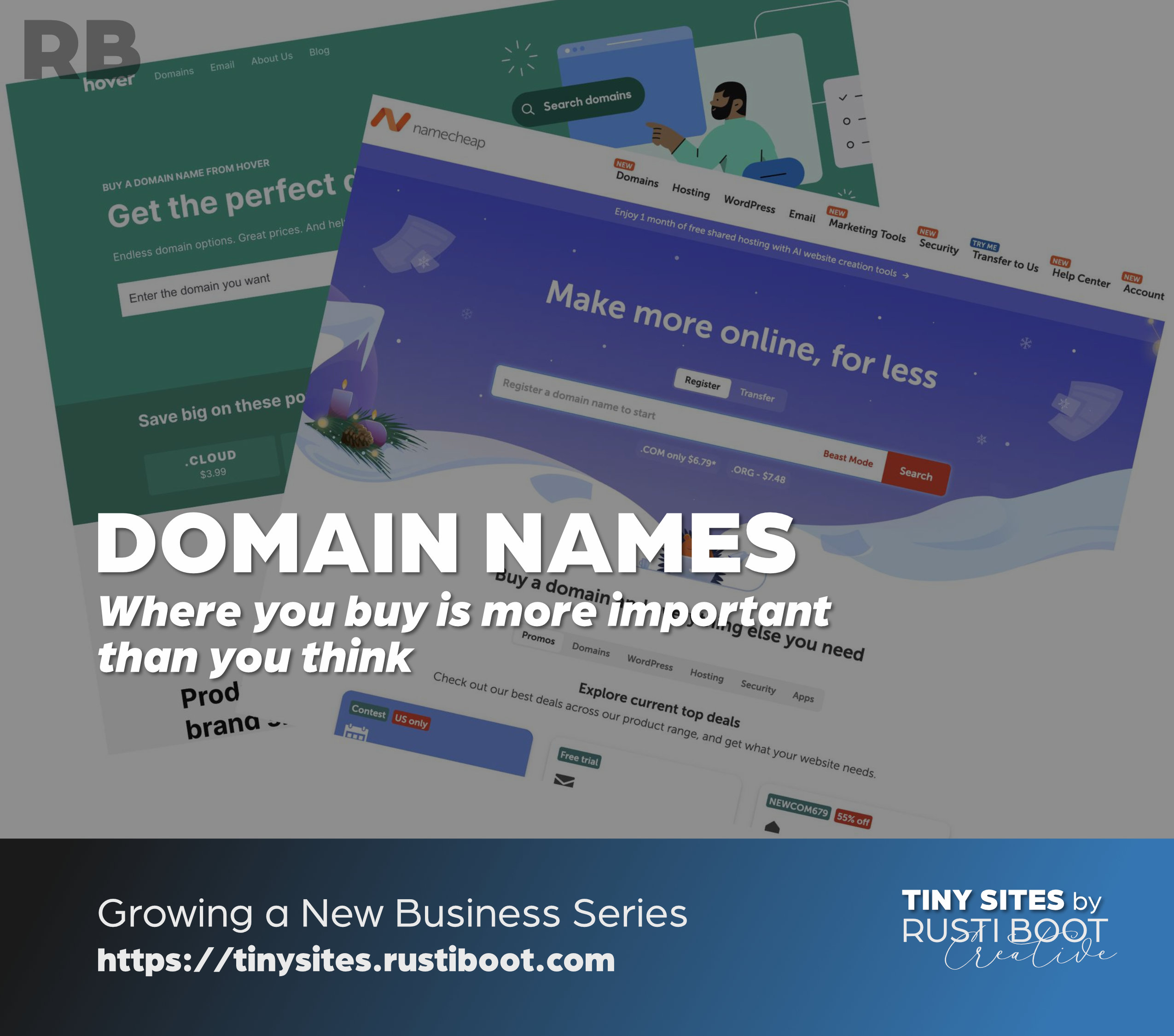
Two registrars I consistently recommend:
GoDaddy can work — but you’ll need to navigate screen after screen of upsells carefully.
Most reputable registrars fall into the same general price range. The real difference is usability and transparency.
Ask yourself:
- Can I easily update my contact information?
- Can I easily update billing details?
- Can I get help without being sold something?
Those questions matter more than saving a few dollars.
The name itself matters, too
Short is better.
Clear is better.
Easy to spell is best.
If your business name is Sally Sue’s Embroidery Emporium, does your domain really need to be the entire thing?
That’s a lot of typing — especially for email addresses.
Sometimes a simpler or more descriptive domain works better:
- SallySues.com
- JacksonvilleEmbroidery.com
Long names quickly become the alphabet when people have to type them often.
I once had an email address that was my first and last name at a very long company domain.
So.
Much.
Typing.
The takeaway
Make good choices when selecting your domain name.
Choose a registrar that’s easy to work with — now and years from now.
Your domain doesn’t need to be expensive.
It doesn’t need to be complicated.
And it shouldn’t feel risky to manage.
A little thought up front can save a lot of frustration later.
